





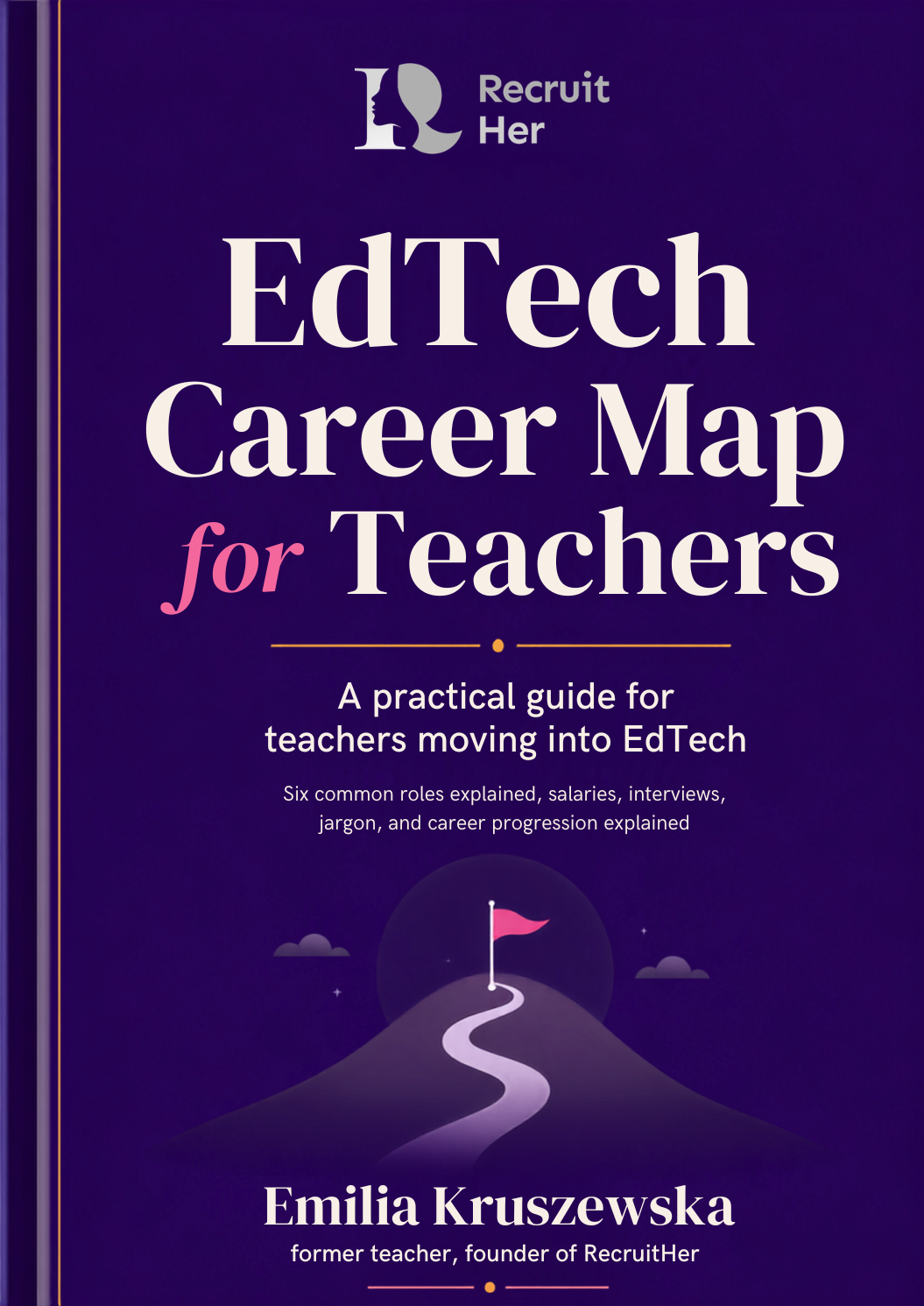

EdTech Career Map for Teachers

You know you want a change, but where do you start?


Transitioning from teaching into EdTech can feel confusing. You may see job titles such as:

Customer Success Manager
Implementation Manager
Instructional Designer
Curriculum Manager
Account Executive
Product Specialist


But what do these people actually do? Which roles are realistic for teachers? What experience are employers looking for? How much could you earn?And how do you explain your teaching experience during an EdTech interview?

The EdTech Career Map gives you clear answers, without assuming you already understand business or technology language.

women

EDTECH CAREER MAP for TEACHER

Get your Copy

You'll learn:

• What the role involves
• What a typical working week may look like
• Who you may report to
• Which teams you’ll work with
• How success is measured
• Which teaching skills transfer
• What skills you may still need to develop
• How to prepare for interviews
• What employers may ask you to do during the hiring process
• Which warning signs to look out for
• What the role may pay

Who is this guide for?

• Primary school teachers
• Secondary school teachers
• School and curriculum leaders
• Former teachers
• Education professionals
• Teachers exploring their options before leaving the classroom
• Teachers already applying for EdTech roles
• Education professionals preparing for an EdTech interview

The EdTech Career Map includes:

• Six detailed role guides
• Salary guidance
• Interview questions
• Example interview tasks
• Reporting lines
• Performance measures
• Transferable teaching skills
• Common skills gaps
• Career progression options
• EdTech terminology and jargon explained
• EdTech provider types
• Practical preparation steps
Get your Guide

The six roles covered:

Customer Success Manager
Help schools and education customers get strong results from a product. You may support customers, lead training, monitor how they use the platform and help them renew their contract.

Implementation or Onboarding Manager

Help new customers set up and start using an EdTech product. You may organise training, manage timelines, answer questions and make sure the launch runs smoothly.

Learning or Instructional Designer
Design digital learning experiences, courses and resources. You may plan learning journeys, write content, create activities and work with designers or developers.

Curriculum or Content Manager

Create and manage education content. You may oversee curriculum materials, assessments, lesson resources or subject based programmes.

Sales Development Representative or Account Executive
Help schools and education organisations understand and purchase a product. You may identify potential customers, lead sales conversations, give product demonstrations and manage relationships.

Product Specialist or Product Manager
Help improve the product and make sure it meets the needs of users. You may collect feedback, work with technical teams, support product demonstrations or help decide what should be built next.

image

About the author

I’m Emilia, founder of RecruitHer.
I started my career teaching English as a second language. I later set up my own language school, which I ran for around seven years before selling it to a competitor.
After that, I moved into university professional services, where I worked for around two years. I then made my own move into EdTech and worked across several education technology companies.
Today, I help EdTech companies find people who understand education, learning and the needs of schools. I work as a recruiter and headhunter, and I also support teachers and education professionals who are considering a move into the sector.
I created the EdTech Career Map because I kept hearing the same questions:
Which EdTech roles could I move into
What do these job titles actually mean?How does my teaching experience transfer?
What will I be asked during an interview?
Which roles are realistic as a first move?
This guide brings together what I’ve learned from my own career change, my work within EdTech, and my conversations with employers and candidates.
My aim is to give teachers a clear and honest view of the sector, without assuming they already understand business or technology language.
You may decide that one role suits you best. But wherever you move within EdTech, you’ll probably work with people in many of the roles covered in this guide.
Understanding how these jobs connect will help you make better career choices, prepare stronger job applications and feel more confident during interviews.
Emilia
Founder of RecruitHer
EdTech recruiter and career coach

You don't have to do it on your own.

What clients say

“I read the guide while preparing for my first EdTech interview. The interview questions, example tasks and explanations of how success is measured were the most useful parts for me. I felt much better prepared and stopped answering every question as though I was applying for another teaching job.”

by Secondary teacher in Manchester

“Before reading the guide, I knew I wanted to move into EdTech, but I didn’t understand what most of the job titles meant. The role breakdowns made everything much clearer, especially Customer Success and Implementation. I now know which roles suit my experience and what I need to prepare before applying.”

by Primary teacher in London

“This guide helped me realise that Product Manager probably wasn’t the right first move for me. That honesty saved me a lot of time. I’m now focusing on Implementation and Customer Success roles, which are a much better match for my skills.”

by Former Head of Department in Birmingham

“I had heard of Customer Success and Instructional Design, but I didn’t really understand how they were different. The guide explained each role clearly and connected the responsibilities to work I already do as an educator. I now have a much better sense of where to focus my job search.”

by Middle school teacher in Texas

FAQs

Is this guide only for teachers based in the UK?

No. The guide includes separate UK and US salary information, terminology and market context.

Do I need EdTech experience?

No. It’s written for teachers and education professionals who may have little or no knowledge of the EdTech sector.

Is this a course?

No. It’s a digital guide that you can work through at your own pace.

Does the guide include CV support?

It explains how teaching experience connects to each role, but it isn’t a complete CV writing programme.

Will this guide help me choose a role?

It’ll help you compare six roles and understand which ones may match your skills, interests and experience.

Will it prepare me for interviews?

The guide includes interview questions, common interview stages, example tasks and preparation advice for each role.

Does buying the guide guarantee a job?

No. The guide helps you understand the sector and prepare more effectively. It doesn’t guarantee employment.

Can I use it if I’m still teaching?

Yes. It can help you research your options before making any decisions about leaving your current role.